
LATEST
72,790 trees, 21 ponds and 209 wells to go for new highway connecting with Vadhavan Port

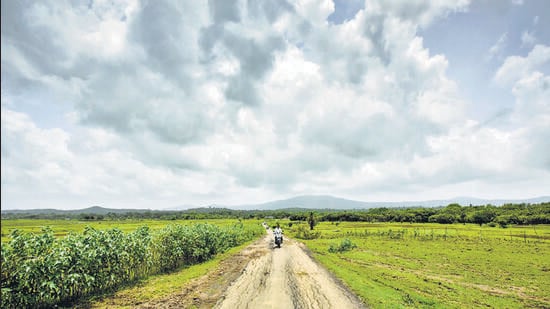
MUMBAI: The construction of a highway from Varor village to Tawa village in Palghar to give high-speed direct connectivity to the proposed Vadhavan Port will extract an environmental toll of 72,790 trees, 21 ponds and 209 wells and borewells, besides necessitating the demolition of 611 houses. Vadhavan Port is being developed by the Jawaharlal Nehru Port Authority (JNPA) and the Maharashtra Maritime Board in Palghar district.

The highway will pass through Dahanu and Palghar talukas. In the latter, villages such as Aakegavhan, Aakoli, Chinchare, Ravte, Gargaon, Sumdi, Shigaon, Khutad, Rani Shigaon, Nanivali and Ambede will be affected. The survey shows that 573 houses and constructions will be pulled down, 17,391 forest trees, 4,105 palms and 33,058 fruit-bearing trees will be cut while 182 borewells and 20 ponds will be filled up. The state will pay ₹197.07 crore as compensation.
In Dahanu taluka, villages such as Vangaon, Ghol, Kolhan, Tawar, Dhamante, Kolavali, Varor, Chinchni, Bawde and Tanashi will be affected. The Dahanu tahsildar’s office said that land belonging to 5,214 persons measuring 244.18 hectares would be acquired for the highway. Thirty-eight constructions and houses will be razed, 6,169 forest trees and 12,067 fruit-bearing trees will be cut, and 27 wells and one pond will be buried. The affected parties will be paid ₹37,93,06,676.
A document shared by JNPA shows that 177.56 hectares of forest land, 52.16 hectares of government land and 454.54 hectares of private land are required for the proposed 120-metre highway. The National Highways Authority of India has issued a Letter of Award for the construction of the first part, a four-lane expressway, to J Kumar Infraprojects Limited and Shinde Developers Pvt Ltd for ₹2,360 crore. The four-lane alignment will be expandable to eight lanes in the future.
Connecting the Delhi-Mumbai Expressway (NE4) and NH 48, this expressway is expected to provide seamless port connectivity to various regions in the state. Green activists, however, cited flaws to HT.
“The project is unnecessary since there are existing toll roads connecting Vadhavan Port to the Western Express Highway and the proposed Delhi-Mumbai expressway,” said Debi Goenka. “Also, it was not included in the Environmental Impact Assessment prepared for the Vadhavan project. It will displace hundreds of families, including tribals and farmers. The destruction of more than 75,000 trees is also not acceptable, given the pathetic track record of the government in implementing so-called compensatory plantation projects.”
Goenka added that the “bankrupt” state government did not have the financial resources for such projects. “The contractors’ association has been threatening to go on strike to recover unpaid dues of almost ₹1 lakh crore,” he pointed out. “This project needs to be discarded at the very outset.”
Environmentalist D Stalin of NGO Vanashakti rued that the Maharashtra government had embarked on “a one-way journey towards desertification”. “The Mumbai Metropolitan Region will resemble a desert in the next seven years,” he said. “An irreversible loss of ecology, habitat, and the lives of local communities is on the cards.”
Stalin said that the curse of the “development” model of the Mahayuti government would cause immense suffering to people. “Palghar, a district with tribals, farmers, fishermen and vibrant natural ecosystems, will become history,” he said. “The clock is ticking, and people need to wake up and save themselves.”