
LIFESTYLE
How to Store Manuka Honey: Shelf Life and Storage Guide

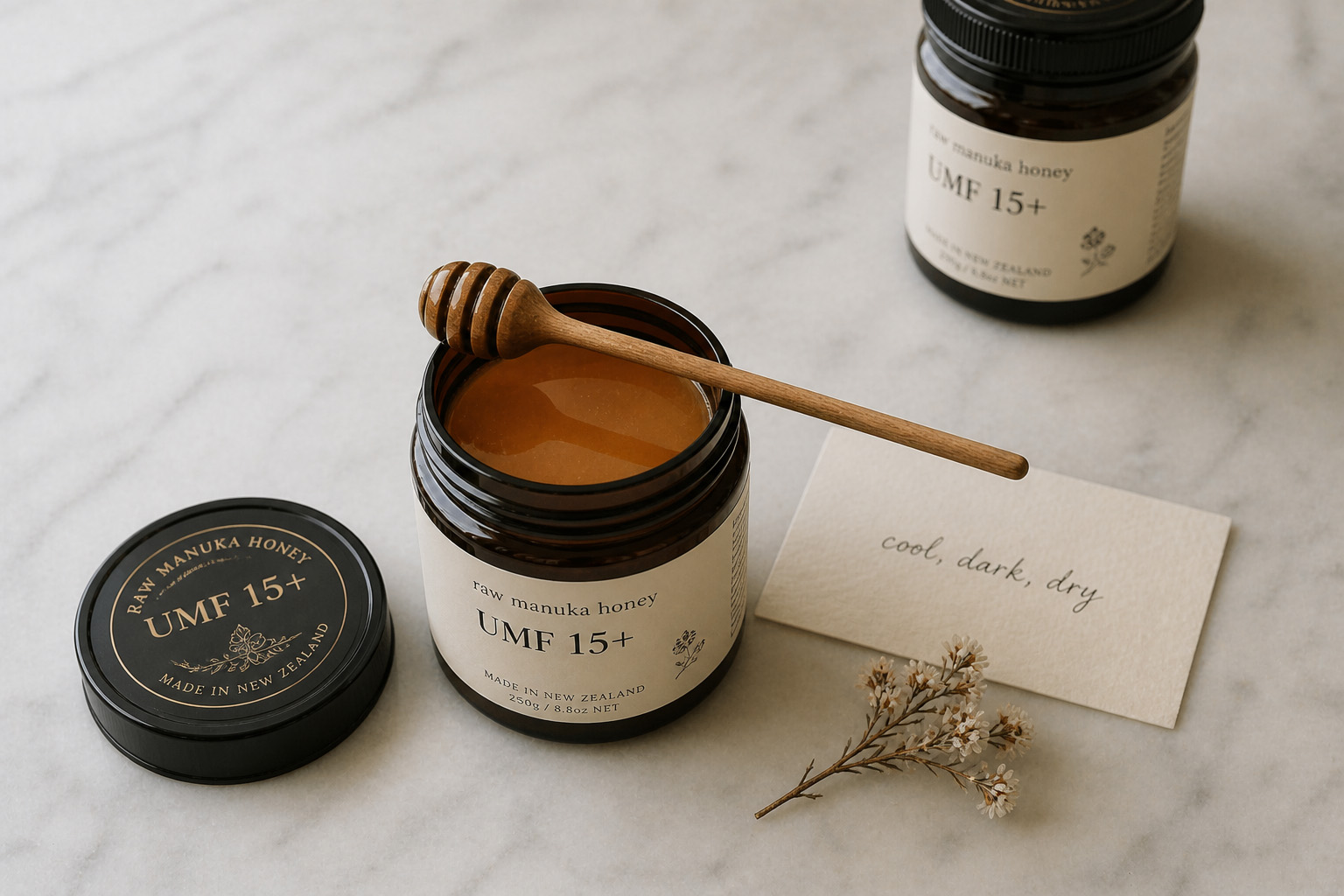
Key Points
- Manuka honey does not need to be refrigerated. Room temperature storage away from direct heat and light is all it needs and is actually better for it than the refrigerator.
- Crystallization is normal and does not mean your honey has spoiled. It is a sign of genuine raw honey and is completely reversible without losing any beneficial properties.
- The MGO content in a well-stored jar of manuka honey does not degrade over time. Research suggests it may actually increase slightly as DHA continues converting to MGO during storage.
- The biggest threats to a jar of manuka honey are moisture, heat, direct sunlight, and a microwave. All four can damage the beneficial compounds you paid for.
- Always use a dry spoon. Introducing moisture into the jar is one of the few things that can genuinely compromise honey’s shelf life and create conditions for fermentation.
A good jar of manuka honey is an investment. At $40 to $150 or more depending on the grade, knowing how to store it correctly is not a small consideration. The good news is that manuka honey is remarkably self-sufficient. Honey in general is one of the most shelf-stable foods on earth. Archaeologists have found honey in ancient Egyptian tombs that was still edible thousands of years later.
That said, manuka honey has properties worth preserving beyond basic edibility. The MGO concentration, the live enzymes, and the beneficial compounds that make it worth the premium are more sensitive than the honey itself. Here is exactly how to store manuka honey to protect everything you paid for.
How to Store Manuka Honey
Room Temperature Is Ideal
Store your manuka honey at room temperature, ideally between 50°F and 77°F (10°C to 25°C). A kitchen cupboard or pantry shelf away from the stove, oven, and any direct heat source is perfect. This is not a compromise. Room temperature is genuinely the best storage condition for manuka honey, not just the most convenient one.
Honey stored at room temperature maintains its natural viscosity, dissolves easily when you need it, and allows the slow natural conversion of DHA to MGO to continue over time. That last point is meaningful: a well-stored jar of manuka honey is not simply holding its potency. Research indicates the MGO content may actually increase slightly during storage as the DHA present in the honey continues converting naturally, provided the jar is kept at room temperature and away from heat and light.
Keep It Away from Direct Light
Ultraviolet light degrades the enzymes and beneficial compounds in honey over time. A cupboard or pantry is ideal. A countertop jar in a sunny kitchen window is not. The original amber or dark glass jar most quality manuka honey comes in provides some light protection, but the safest approach is to keep it in a dark location regardless of the container.
Keep the Lid Tightly Sealed
Honey is hygroscopic, meaning it naturally absorbs moisture from the surrounding air. Too much absorbed moisture raises the water content of the honey above the level that inhibits microbial growth, which is what gives honey its shelf stability in the first place. A tightly sealed lid is the simplest protection against this. After every use, close the jar completely rather than leaving it loosely covered.
Always Use a Dry Spoon
This is the storage rule most people overlook and the one most likely to cause a real problem. A wet spoon introduces water directly into the honey, creating localized pockets of higher moisture that can lead to fermentation over time. Keep a dedicated dry spoon near your manuka honey jar and make it a habit. Rinse and fully dry any spoon before going back into the jar for a second scoop.
Keep It in the Original Jar
The original jar your manuka honey came in was chosen for a reason. Dark glass or high-quality food-grade plastic minimizes light exposure and prevents chemical leaching. If you transfer manuka honey into another container, make sure it is completely clean, completely dry, and food-safe. Glass is preferable to plastic for long-term storage. Avoid metal containers, which can react with the natural acids in honey over time.
Does Manuka Honey Need to Be Refrigerated?
No. Manuka honey does not need to be refrigerated and is better off stored at room temperature. Refrigeration is not harmful to honey but it causes two problems that make it a poor storage choice for manuka specifically.
First, cold temperatures accelerate crystallization significantly. A jar of manuka honey that might take months or years to crystallize at room temperature will crystallize within weeks in the refrigerator. This is not a safety issue but it makes the honey much harder to use and creates a temptation to microwave it to re-liquify, which does destroy beneficial compounds.
Second, cold storage slows the natural DHA-to-MGO conversion process that may increase potency over time. Storing your manuka honey in the refrigerator essentially puts that beneficial process on pause.
The refrigerator is not where manuka honey belongs. A cool, dark, dry cupboard is everything it needs.
The Short Answer on Refrigeration
No refrigeration needed. Room temperature in a sealed jar away from heat and light is the ideal storage condition. The refrigerator accelerates crystallization and slows the natural MGO development process. Keep it in the cupboard.
Manuka Honey Crystallization: What It Means and What to Do
Crystallization is one of the most misunderstood things about honey. Many people assume it means the honey has gone bad or is past its best. The opposite is true. Crystallization is a sign of genuine, unadulterated raw honey. Heavily processed commercial honey that never crystallizes has often been heat-treated to the point that the natural glucose crystals cannot form, which is also the point at which many beneficial compounds are damaged.
Manuka honey crystallizes because of its natural glucose content. The process is entirely safe and does not affect the beneficial properties of the honey. MGO, Leptosperin, DHA, enzymes, and antioxidants all survive crystallization intact. You are not losing anything when your jar crystallizes except the pourable texture.
How to Reverse Crystallization Without Damaging the Honey
The correct method is gentle, indirect warmth. Do not use a microwave. Do not place the jar in boiling water. Do not put it in a hot oven. All of these apply heat that exceeds the temperature threshold above which MGO and beneficial enzymes begin to degrade.
The right approach:
- Fill a bowl or pot with warm water, not boiling. The water should be comfortable to touch, roughly 95°F to 104°F (35°C to 40°C).
- Place the sealed jar in the warm water and leave it for 15 to 20 minutes.
- Stir gently during or after if needed.
- Repeat with fresh warm water if the honey has not fully returned to a liquid state.
This method returns the honey to a smooth, usable consistency while keeping the temperature low enough to preserve what you paid for. Patience is the key. Gentle warmth over time rather than high heat applied quickly.
Never Microwave Your Manuka Honey
A microwave heats unevenly and rapidly, easily reaching temperatures that damage natural enzymes, raise HMF levels, and stop the DHA-to-MGO conversion process that supports potency over time. The same applies to placing the jar in boiling water. The goal when reversing crystallization is warm, not hot. If the water is too hot to hold your hand in comfortably, it is too hot for your manuka honey.
What Heat Does to Manuka Honey
Heat is the primary enemy of manuka honey’s full beneficial profile. Understanding what heat actually does and does not do is important for both storage and use.
MGO itself is relatively heat-stable and does not degrade as readily as some guides suggest. What sustained high heat does damage is the natural enzymes, the antioxidant activity, and the HMF profile. It also stops the natural DHA-to-MGO conversion process that supports potency over time. High HMF levels are used by UMF quality testing as a marker of heat damage or overheating during handling, which is why reputable producers carefully control temperature throughout production.
For storage this means: keep manuka honey away from the stovetop, the oven, and any warm appliances that generate ambient heat. A kitchen cupboard near the oven is not ideal. A pantry or a cupboard on the opposite side of the kitchen from your cooking area is better.
For use in the kitchen this means: avoid baking with it or cooking it into anything at high temperature for extended periods. The enzymes and antioxidants that complement the MGO are sensitive to heat even when the MGO itself survives. Use it as a finishing ingredient drizzled over completed dishes, stir it into warm (not boiling) drinks, and use it raw in cold preparations. Our guide to how to use manuka honey covers every application in detail with this principle built in throughout. Our lavender lemonade and healthy hot toddy are both built around keeping the honey at the right temperature.
Manuka Honey Shelf Life: What You Actually Need to Know
Honey has an almost indefinite shelf life when stored correctly. This is not marketing language. It is one of the most well-documented properties of honey across food science. The low moisture content, the acidic pH, and the hydrogen peroxide activity combine to create an environment where microbial growth is effectively impossible in properly stored honey.
For manuka honey specifically the shelf life question has a nuance worth understanding. The honey itself will not spoil. But the MGO potency that makes manuka honey worth buying exists within a specific range that can change over time in two directions.
See also

On the positive side, MGO may increase slightly during the first two to three years of storage as DHA continues converting. On the neutral side, after an extended period (typically beyond three to five years depending on initial DHA levels and storage conditions) the DHA pool may be exhausted and MGO levels may begin to plateau or slowly decline. Most reputable producers include a best-before date on the label that reflects the period during which the UMF rating is guaranteed. That date is not a spoilage date. It is a potency assurance date.
For practical purposes: an unopened jar stored correctly typically maintains full potency for three to five years from the date of packaging. Once opened, two to three years of correct storage will preserve quality well. The best-before date on the label is a potency assurance date, not a spoilage date. A jar stored correctly beyond that date is not harmful or spoiled. It may simply have a slightly different MGO profile than when first tested. The honey is still perfectly good to eat and will still have meaningful antibacterial and antioxidant properties.
Manuka Honey Storage at a Glance
| Factor | Best Practice | Why It Matters |
|---|---|---|
| Temperature | 50°F to 77°F (10°C to 25°C) | Maintains viscosity and supports natural DHA-to-MGO conversion |
| Light | Dark cupboard or pantry | UV light degrades enzymes and beneficial compounds over time |
| Moisture | Lid sealed, dry spoon only | Moisture raises water content and can trigger fermentation |
| Container | Original jar, dark glass preferred | Protects against light and prevents chemical leaching |
| Refrigeration | Not recommended | Accelerates crystallization and slows DHA-to-MGO conversion |
| Freezing | Safe but unnecessary | Does not harm the honey but offers no advantage over room temperature storage |
| Shelf life | Indefinite for food safety. Best potency 3 to 5 years unopened, 2 to 3 years after opening. | Best-before date reflects potency guarantee, not food safety |
Traveling with Manuka Honey
This is a gap most storage guides never address. If you take your daily wellness spoonful seriously, you are probably not leaving your manuka honey at home when you travel. A few practical notes:
- Carry-on rules: Honey is a liquid under TSA rules. A jar larger than 3.4 ounces (100ml) cannot go in your carry-on luggage and must be checked. A travel-sized jar or a small silicone squeeze container transferred from your main jar before departure solves this cleanly.
- Heat in checked luggage: Cargo holds are not temperature-controlled to the same degree as the cabin. In very hot destinations, a jar in checked luggage on the tarmac can be exposed to significant heat. Wrap the jar in clothing and pack it away from the exterior of the bag where heat transfers most quickly.
- Hotel room storage: Keep it away from the window and away from the minibar area which can be warmer than the rest of the room. The desk drawer or a shelf in the main room rather than in the bathroom (which tends to be more humid) is ideal.
- International travel: Some countries restrict the import of honey. Check the customs regulations for your destination before packing a jar in your luggage.
Frequently Asked Questions
Does manuka honey need to be refrigerated?
No. Room temperature storage in a sealed jar away from direct heat and light is ideal. Refrigeration accelerates crystallization and slows the natural MGO development process. A kitchen cupboard or pantry is all your manuka honey needs.
Why has my manuka honey crystallized?
Crystallization is a natural process in genuine raw honey caused by the glucose content forming solid crystals over time. It does not mean the honey has spoiled or lost its beneficial properties. MGO, enzymes, and antioxidants all survive crystallization intact. To return it to a liquid state, place the sealed jar in warm (not boiling) water for 15 to 20 minutes and stir gently.
Can you microwave manuka honey to de-crystallize it?
No. A microwave heats unevenly and rapidly, easily reaching temperatures that damage natural enzymes, raise HMF levels, and compromise the beneficial compound profile of your honey. Use warm water in a bowl instead. The goal is gentle, indirect warmth over 15 to 20 minutes, not rapid high heat.
How long does manuka honey last?
Stored correctly at room temperature in a sealed jar, manuka honey has an almost indefinite shelf life from a food safety perspective. An unopened jar typically maintains full potency for three to five years from the date of packaging. Once opened, two to three years of correct storage will preserve quality well. The best-before date on the label is a potency assurance date, not a spoilage date. A jar stored correctly beyond that date is still safe to eat and will retain meaningful beneficial properties.
Does manuka honey go bad?
No. Manuka honey does not go bad or spoil in the way perishable foods do. Its low moisture content, acidic pH, and natural antibacterial properties make it one of the most shelf-stable foods on earth. What can change over time is the flavor, texture, and MGO potency, particularly after the best-before date. A jar stored correctly is still perfectly safe to consume well beyond that date. It is simply not guaranteed to match the UMF grade stated on the label after the potency assurance window has passed.
Yes, freezing does not damage honey or its beneficial properties. However it offers no advantage over room temperature storage. Honey stored correctly at room temperature has an almost indefinite shelf life without freezing. The main downside of freezing is that it will need to be thawed before use, and rapid thawing with heat defeats the purpose. There is no good reason to freeze manuka honey if you are storing it correctly at room temperature.
Does the MGO in manuka honey degrade over time?
Not under good storage conditions and not in the short to medium term. Research indicates the MGO content in properly stored manuka honey may actually increase slightly during the first two to three years of storage as DHA continues converting to MGO. After that initial period, MGO levels plateau and may gradually decline as the DHA pool is exhausted, typically beyond three to five years depending on initial DHA levels. Correct storage at room temperature, away from heat and light, supports this natural process.
What happens if manuka honey gets hot?
Sustained exposure to high heat degrades MGO, destroys natural enzymes, reduces antioxidant activity, and increases HMF levels, which is a marker of heat damage used in quality testing. For storage, keep the jar away from warm appliances and direct sunlight. For use, do not cook or bake with manuka honey at high temperatures. Stir it into warm (not boiling) drinks and use it cold or as a finishing drizzle on completed dishes.
Is it okay to store manuka honey in plastic?
High-quality food-grade plastic is safe for short to medium term storage. For long-term storage, dark glass is preferable because it provides better light protection and eliminates any risk of chemical leaching from plastic over an extended period. Keep it in the original jar when possible, as producers choose their containers with the honey’s shelf stability in mind.
For everything you need to know about using manuka honey correctly once you have it stored right, see our guide to how to use manuka honey. For the complete guide to what makes it worth buying in the first place, start with our manuka honey benefits guide. And for our full collection of recipes, beauty treatments, and wellness guides using Flora Health manuka honey, everything is at The Better Living Manuka Honey Guide.
Better Living may earn commissions through affiliate links and may occasionally feature sponsored or partner content. If you make a purchase through our links, we may receive a small commission at no cost to you.