
LIFESTYLE
When Is a Mansion Too Big? The Luxury of Livable Scale – 50

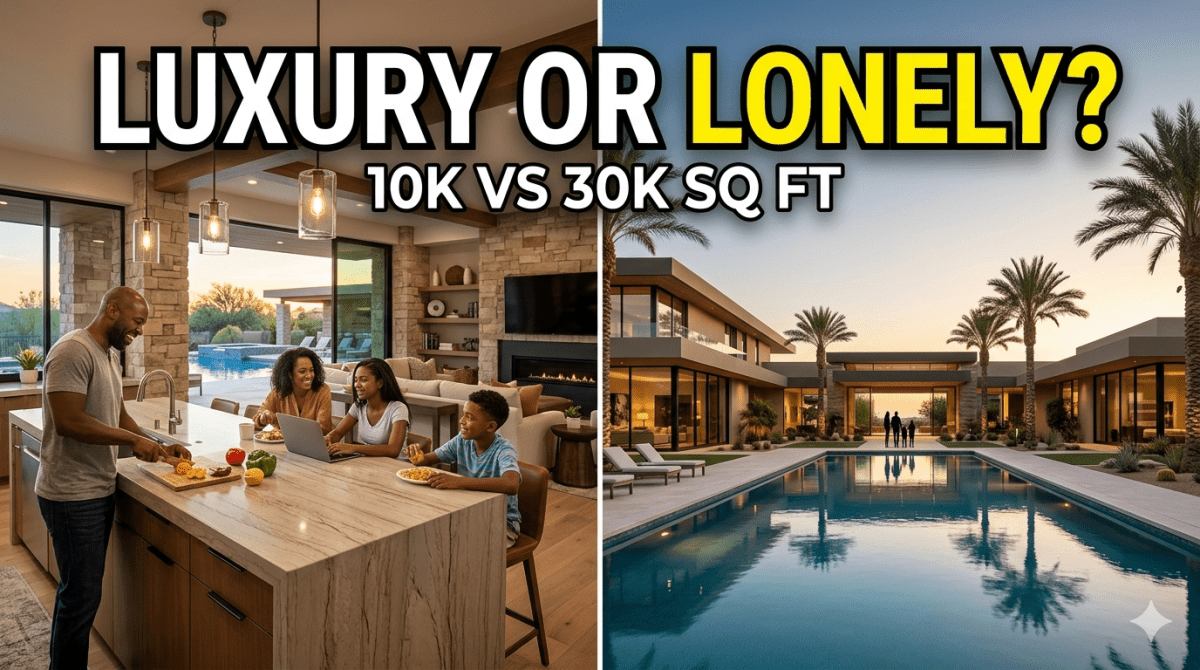
There is a particular kind of mansion that performs beautifully on camera. The motor court is cinematic, the entry sequence is dramatic, the ceilings soar, and the pool looks less like a backyard amenity than the centerpiece of a private resort. The architecture is designed for reveal after reveal, each room slightly more extravagant than the last.
And then, after the initial awe wears off, a more practical question begins to surface.
Would a family actually enjoy living here?
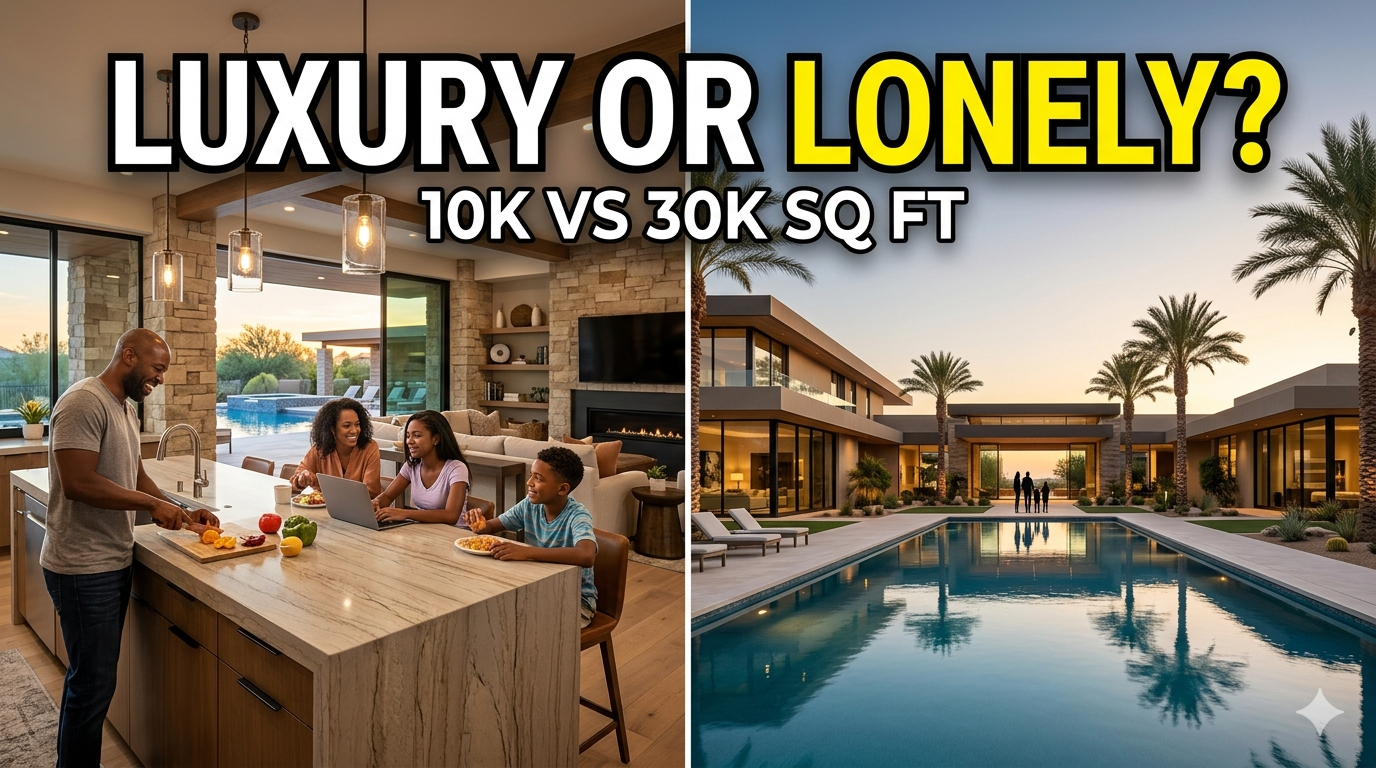
That question becomes especially relevant when a home reaches 20,000, 25,000, or 30,000 square feet. At that scale, a mansion is no longer simply a larger version of a luxury family home. It becomes something else entirely: a private resort, a legacy estate, a hospitality platform, a collection space, or an architectural statement.
None of that is inherently wrong. For the right owner, those qualities may be exactly the point. But for a family of four, especially a family with children still living at home, the most impressive mansion is not always the most livable one.
True luxury is not measured only in square footage. It is measured in how gracefully a home supports the life inside it.
The Difference Between a Mansion and an Estate
A 10,000-square-foot home and a 30,000-square-foot home may both be described as mansions, but they are not really the same product.
A well-designed 10,000 to 15,000-square-foot residence can still function as a family home. It can offer the full vocabulary of luxury living — a substantial primary suite, children’s bedrooms with privacy, guest accommodations, a generous kitchen, a prep kitchen, a home office, a media room, a gym, outdoor living, a pool, and proper garage capacity — without losing its sense of domestic intimacy.
At that size, the house can still have a center.
That center is usually not the formal living room or the grand foyer. It is the kitchen, breakfast area, family room, and outdoor living space. These are the rooms where people naturally overlap. Children come in from school, parents make coffee, guests linger, weekend plans are discussed, and the ordinary rhythm of the household still has a place to happen.
That is what many oversized homes gradually lose.
Once a house grows beyond 20,000 square feet, the question changes. The issue is no longer whether the family needs more space. The better question is what functions the estate is expected to support.
At that scale, the additional square footage may be useful if the family entertains frequently, hosts extended relatives, employs staff, keeps a car or art collection, needs a serious wellness wing, or uses the property for business, philanthropic, or social gatherings. At 30,000 square feet, the home is rarely about ordinary family life alone. It is usually an estate in the fuller sense of the word, with guest wings, staff circulation, catering infrastructure, service entries, security considerations, spa facilities, theater spaces, collector garages, gallery walls, and enough formal entertaining space to host events without disturbing the private family areas.
That can be magnificent. It can also be excessive if the architecture does not protect the family experience.
The 10,000 to 15,000-Square-Foot Sweet Spot
For many affluent families, the most practical luxury range is between 10,000 and 15,000 square feet.
That may sound enormous to most people, and it is. But in the context of high-end residential design, this range often provides the best balance between comfort, privacy, amenities, and livability. A home of this size can usually give a family of four nearly everything that makes luxury living feel complete: generous bedroom suites, space for guests, a proper family kitchen supported by a prep kitchen or scullery, formal and informal gathering rooms, a media or game room, a private office, a gym, indoor-outdoor entertaining, pool access, and the kind of utility spaces that keep daily life organized rather than chaotic.
Most importantly, the home can offer all of this without forcing the household to live in separate regions of the property.
That distinction matters.
A mansion should allow privacy. It should not create emotional distance by accident.
The most livable luxury homes are designed around controlled proximity. Parents can retreat. Children can have independence. Guests can have privacy. Staff can operate discreetly. But the family still crosses paths naturally throughout the day. The house gives everyone room to breathe without making togetherness inconvenient.
That is the difference between a large house and a well-composed home.
Why 20,000 Square Feet Can Make Sense
A 20,000-square-foot mansion can be highly practical when the lifestyle justifies the architecture.
This is the scale where a home begins to behave like a true estate. The extra square footage is not necessarily for the nuclear family itself. It is for the ecosystem around the family: overnight guests, grandparents, adult children, staff, security, private chefs, assistants, tutors, trainers, business associates, charity events, holiday gatherings, and social entertaining.
In that context, the additional space has a purpose. A guest wing is not indulgent if relatives or friends stay often. A catering kitchen is not excessive if the family entertains regularly. A secondary family room or teen lounge may be useful if children frequently host friends. A wellness suite can be practical for a family that uses fitness, recovery, sauna, massage, or training spaces as part of its normal routine. A collector garage or art gallery can be rational if the owner has serious collections that need to be housed, protected, and displayed properly.
But the success of a 20,000-square-foot home depends heavily on zoning.
The family core must remain intact. Guest quarters should be separated from private bedrooms. Entertaining spaces should be near the entry, dining areas, bar, and outdoor terraces. Service areas should have their own logic. Staff should be able to operate without moving through the family’s most private spaces.
When that is done well, 20,000 square feet can feel gracious and functional. When it is done poorly, the home can feel like an impressive collection of rooms searching for a daily purpose.
The 30,000-Square-Foot Question
A 30,000-square-foot mansion is in a different category.
This is no longer simply a home with generous rooms. It is a private environment.
For some ultra-high-net-worth owners, that is the attraction. A property of this scale can function as a personal resort, a family compound, a statement of permanence, a controlled hospitality venue, or a sanctuary from public life. It can provide privacy, security, event capacity, staff accommodation, guest separation, wellness infrastructure, art and car storage, and the ability to host without relying on outside venues.
Those benefits are real. But for a family of four, the tradeoffs are equally real.
A 30,000-square-foot home requires a level of operational support that smaller mansions do not. Cleaning, maintenance, landscaping, mechanical systems, pool systems, lighting systems, security systems, guest turnover, climate control, and repairs all become more complex. The home begins to require management, not just ownership.
There is also the issue of distance.
In a very large home, especially a one-story estate, the walk from the primary suite to the children’s rooms may become substantial. The kitchen may be far from the guest wing. The garage may be far from the daily living areas. A child’s playroom or teen lounge may be so removed from the family core that it becomes isolated rather than useful.
That may sound like a small inconvenience, but daily life is made up of small conveniences. A home that looks extraordinary in a tour can feel surprisingly inefficient at 7:15 on a school morning.
The Problem with the One-Story Mega-Mansion
The one-story mansion has obvious appeal.
It feels resort-like. It connects beautifully to the landscape. It avoids stairs. It can create long, elegant sightlines and effortless indoor-outdoor flow. In places like Arizona, Texas, California, and Florida, the one-level estate is a natural expression of climate, land, and lifestyle.
But at 30,000 square feet, one-story living can become a design challenge. The footprint becomes enormous, the roofline expands, and the walking distances increase. The house can begin to feel like a series of destinations connected by corridors rather than a cohesive family residence.
That does not mean a large one-story estate cannot work. It can. But it requires exceptional discipline.
The plan needs to be clustered rather than endlessly linear. The family spaces should remain close to one another. The children’s wing should not feel like a separate property. The service areas should be efficient. The guest areas should be gracious but not dominant. The central living spaces should remain the emotional and practical heart of the home.
Without that discipline, a one-story mega-mansion can become an expensive hallway system with spectacular finishes.
The Two Homes Inside a Mega-Mansion
One of the best ways to understand very large homes is to separate the daily family home from the estate layer.
The daily family home is the part of the property used constantly: the kitchen, family room, breakfast area, primary suite, children’s rooms, laundry, mudroom, garage, home office, outdoor living, and pool access. For a family of four, that daily-use core may only need 5,000 to 8,000 square feet to feel exceptionally comfortable.
The estate layer is different. It includes guest suites, formal rooms, entertainment spaces, theater, gym, spa, staff areas, catering kitchen, wine cellar, collector garage, galleries, storage, and mechanical support. That estate layer may add another 5,000, 10,000, or 20,000 square feet.
The problem is not the existence of the estate layer. The problem is when the estate layer overwhelms the daily family home.
A great mansion should make daily living feel effortless. It should not make the family feel as though they are occupying one section of a private hotel built for everyone else.
Privacy Without Isolation
The best family mansions understand a simple but often overlooked principle: privacy is not the same as isolation.
Parents need retreat. Children need independence. Guests need comfort. Staff need discretion. Entertaining spaces need separation. But the family still needs connection.
A well-designed mansion creates moments of natural return. The kitchen pulls people back in. The family room remains comfortable enough to actually use. The outdoor living area is close enough to become part of daily life, not just a visual feature. The children’s rooms are private but not exiled. The primary suite is serene but not detached from the rest of the household.
This is where true luxury becomes subtle.
It is not only about marble, glass, stone, millwork, lighting, or views. It is about how intelligently the home choreographs daily life. The best homes make good habits easier. They make gathering natural. They make hosting seamless. They make privacy available without making togetherness inconvenient.
What DFW Luxury Buyers Should Take From This
This question is especially relevant in Dallas-Fort Worth because the region gives affluent buyers so many different versions of luxury. There is high-rise living in Dallas, traditional estate living in Highland Park, University Park, and Preston Hollow, executive family luxury in Plano, Frisco, Southlake, and Westlake, and larger privacy-oriented properties in Prosper, Parker, Rockwall, and the outer estate markets.
For buyers relocating from California, New York, Chicago, Miami, and other high-cost markets, North Texas can be surprising. The amount of land, garage capacity, new construction, and square footage available here can quickly reset expectations. A buyer who once imagined 6,000 square feet may suddenly consider 12,000. A buyer who wanted 12,000 may be shown 20,000. A buyer who wants privacy and presence may be drawn toward something even larger.
That abundance can be tempting, but the smartest luxury buyers should resist the reflex to equate more square footage with a better life.
In North Texas, the better question is not simply how large the house is. The better question is how the home lives. Is it close enough to schools, airports, private clubs, restaurants, corporate campuses, and family routines? Does the layout support children? Does it support entertaining without sacrificing privacy? Does it require more staff than the family wants to manage? Are the most beautiful rooms also the most usable rooms?
Most importantly, does the home make daily life easier, or merely more theatrical?
For some buyers, a 20,000 or 30,000-square-foot estate will be exactly right. For others, a beautifully designed 10,000 to 15,000-square-foot home in the right location will deliver a better version of luxury.
So forget “smaller” luxury. Think “smarter” luxury.
The Final Measure of a Mansion
The most practical mansion for a family of four is usually not the largest one. It is the one with the clearest sense of purpose.
A 10,000 to 15,000-square-foot home often provides the best balance of scale, comfort, privacy, and family connection. A 20,000-square-foot estate can make sense when the household has the lifestyle infrastructure to support it. A 30,000-square-foot mansion is best understood as a private resort or legacy estate rather than a conventional family home.
The distinction matters because luxury should not work against the family it is meant to serve.
The real measure of a mansion is not how many rooms it has, how long the driveway is, or how dramatic the tour feels. The real measure is whether the home makes life more beautiful, more connected, more private, more comfortable, and more effortless.
That is the mansion worth wanting.
Luxury Buyer Decision Framework
Question 1
How many people live in the home full time?
Question 2
How old are the children?
Question 3
Does the family have live-in or daily staff?
Question 4
How often does the family host overnight guests?
Question 5
Does the home need to support business entertaining or philanthropic events?
Question 6
Are there collections that require dedicated space, such as cars, art, wine, watches, books, or memorabilia?
Question 7
Does the family need a wellness wing, gym, spa, sport court, or recovery space?
Question 8
Does the family want a private resort or a highly livable family home?
Question 9
Can the household operate the property without excessive staff dependency?
Question 10
Will the layout cause family members to naturally cross paths every day?
Recommended Practical Mansion Size by Use Case
| Family / Lifestyle Type | Recommended Size | Why It Works |
| Family of four with younger children | 7,000 to 10,000 sq ft | Strong proximity, easier supervision, still luxurious |
| Family of four with teenagers | 10,000 to 15,000 sq ft | Better privacy, teen spaces, entertainment areas |
| Executive family with frequent guests | 12,000 to 18,000 sq ft | Guest wing, office, entertaining, wellness space |
| Multi-generational family | 15,000 to 25,000 sq ft | Separate suites, guest quarters, secondary living |
| Staffed estate | 18,000 to 30,000 sq ft | Service zones, staff areas, hosting capacity |
| Private resort / legacy estate | 30,000+ sq ft | Prestige, events, collections, security, hospitality |