
STARTUP
Marketing Has Changed. Are You Ready To Adapt?

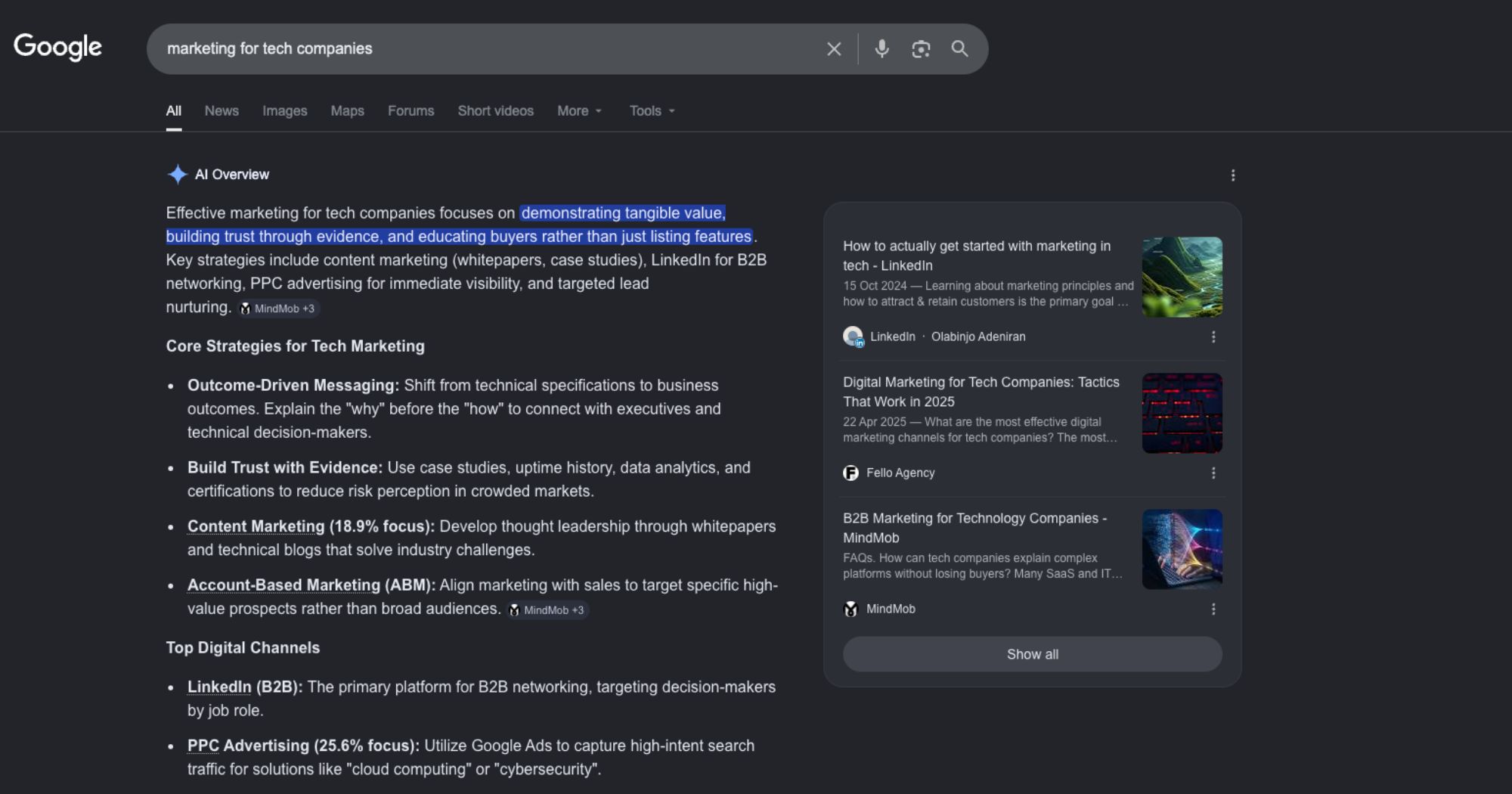
If you’re still measuring marketing success by website clicks, lead form fills, and TV reach figures, your dashboard is telling you a story that ended years ago.
The way consumers search for, evaluate, and decide on the products and services they buy has changed more in the past 24 months than in the previous decade. Human behaviour has changed, and the brands that recognise it early, including some of Australia’s youngest and sharpest commercial operators, are rapidly buying market share at a discount while their competitors keep putting their budget into TV commercials.
Here’s what’s actually happening, and what it means for the way you’re spending your marketing dollars.
Zero-click searches have become the norm
Google still processes more than 13 billion searches a day globally. But the link between a search and a click on someone’s website has snapped.
According to Similarweb, 69% of all Google searches now end without a single click to any external website — up from 56% just a year earlier. The Pew Research Centre found that when an AI Overview appears, only 1% of searches result in a click through to one of its cited sources. Click-through rates for queries that trigger AI Overviews drop by nearly 60%, according to research from Ahrefs and Seer Interactive.
For Australian businesses, the local picture matches the global trend. Google AI Overviews rolled out here in October 2024 and have since become a fixture across product, comparison, and “best of” queries; exactly the searches that used to drive purchase-intent traffic to brands of all sizes.
The compounding effect is that even when users do click, they’re clicking on fewer things. Gartner projects a 25% decline in traditional search traffic by the end of 2026, and Ahrefs found that 73% of B2B websites experienced significant traffic losses between 2024 and 2025, independent of any drop in their actual search rankings.
Sitting alongside this is the rise of AI tools as primary research engines. ChatGPT is now the sixth most-visited website in Australia, with around 8 million unique Australian users a month sending an estimated 58 million queries a day. AI referral traffic — visitors who arrive at a website having been pointed there by an AI tool — grew 357% globally in the year to mid-2025, according to Similarweb.
For brands, this means there’s now a layer of synthesis sitting between your content and your potential customer. If you’re not part of what gets summarised, you’re no longer in the conversation at all.
Traditional channels are weaker than the figures suggest
The picture isn’t much better for the channels marketers have leaned on for decades.
The Australian Communications and Media Authority’s 2024 data shows weekly free-to-air TV viewership fell from 71% of Australians in 2017 to 46% in 2024 — the first time the figure has dipped below half. Average weekly viewing time among that smaller audience also dropped, from 5.6 hours in 2023 to 4.8 hours in 2024. By contrast, 91% of Australians used an online video service in any given week, with YouTube (57%) overtaking every traditional channel as the country’s most-watched video platform.
Radio is technically holding ground — 65% of Australians still listen weekly — but the way it’s consumed has shifted. AM listenership dropped to 20% in 2024 (from 23% the year before) and FM to 52% (from 56%). For most listeners, radio is now passively consumed in the background, rather than having active attention. That distinction is important when you want your message to cut through.
Both channels are still measured as they were a decade ago: panel-based estimates, modelled reach, and assumed attention. The numbers are increasingly an act of guesswork, perpetuated by those selling the spots and dots.
So, what is the new playbook?
It’s not all despair. It’s the opposite. A shift this profound usually creates more opportunity than risk for brands willing to be bold and exploit first-mover advantage.
A few principles seem to be holding up across the early data.
Brand strength is now a search input. Brands that get cited by AI tools earn 35% more organic clicks and 91% more paid clicks than uncited competitors, per Seer Interactive’s November 2025 analysis. The signals AI systems use to decide who to cite — third-party media coverage, expert quotes, structured information, consistent positioning, and earned mentions — are the same signals PR, content, and influencer marketing have always generated. Those channels are no longer “soft” or “supporting.” They feed the algorithm directly and strongly increase the likelihood that you get seen.
Fewer clicks, but with more intent. AI-referred visitors convert at roughly 23 times the rate of traditional organic traffic, according to Onely’s analysis of Ahrefs and Passionfruit data. Yes, the volume is dropping, but the visitors who do come through are further along in the purchase decision. Optimising your funnel for high-intent traffic is now more valuable than optimising for top-of-funnel volume.
Marketing has become a longer game. With AI Overviews answering most informational queries directly, the first time a potential customer interacts with you may not be on your website at all — it might be a podcast they heard, an article that quoted your founder or CEO, a Reddit thread that mentioned you, or a LinkedIn post a friend shared. By the time they finally do search for you by name, they’ve already half-decided that they want to choose you. More touchpoints, longer journeys, and brand familiarity are doing more of the work to drive conversion.
Brands should be considering alternative channels, like sports sponsorship
If the new marketing reality is that brand strength, third-party validation, and active attention are the things are becoming increasingly important, then sports sponsorship sits very close to the centre of that Venn diagram.
Nielsen research found that 81% of sports fans trust the brands that sponsor the teams and events they follow — a figure second only to personal recommendations from friends and family. The same research has consistently shown a roughly 10% lift in purchase intent across exposed fanbases. In an environment where digital ad recall is collapsing and trust in social and search channels is splintering, those are exceptional numbers.
It’s a simple mechanism that is the same as media and influencers. You’re essentially buying trust. The accumulated goodwill, credibility, and emotional equity a team has built with its community slowly but reliably moves to the brands publicly associated with it. That equity is durable in a way that programmatic impressions are not, and AI systems do notice it as well: sustained sponsorship generates citations, mentions, and authority signals across local media, social platforms, fan communities, and broadcast.
This holds across the spectrum. Local community clubs — junior footy, netball, basketball — generate hyperlocal trust that’s invaluable for service businesses, trades, real estate agents, and retailers selling within a defined catchment. Sponsoring the under-12s is how generations of Australian small businesses have reliably embedded themselves in the social fabric of their suburbs. Think about brands like Revo.
At the professional end, the strategy is the same. Australia’s top sports franchises, like the Perth Wildcats, generate active, engaged attention across arena audiences, broadcast, streaming, social media, and earned editorial coverage simultaneously. Add your branding to the team jersey, and you have a system that provides visibility and connection with fans for many years to come. That’s a fundamentally different commercial product to a 30-second TV spot watched on a declining free-to-air audience, or a banner ad served on the web, where people have largely become immune to them.
The combination of high trust, high attention, durable association, and AI-readable authority signals makes well-chosen sponsorship one of the few channels that has actually become more valuable as the rest of the marketing landscape has fragmented.
So should brands cut, hold, or increase marketing spend?
The honest answer is: all three. But that’s not very helpful, is it?
The right question isn’t “should I spend more or less on marketing?”
It’s “which channels are giving me a measurable return, and which ones am I funding out of habit?”
Most marketing budgets have a long tail of legacy spend that no one has audited in 18 months.
There’s strong historical evidence that smart brands lean in during tight markets. Analysis of the IPA Effectiveness Awards database by Les Binet and Peter Field found that brands that increased their share of voice during the 2008–09 recession achieved roughly 4.5 times the annual market-share growth of brands that pulled back. Harvard Business Review research across multiple recessions found that 80% of companies that cut marketing costs hadn’t regained pre-recession sales and profits three years later.
The reason is that when most competitors retreat, the share of voice gets cheaper to buy.
Zig when they zag. Buy when they sell. Warren Buffett has been the master of this.