
STARTUP
14 Business Books To Add To Your Winter Reading List

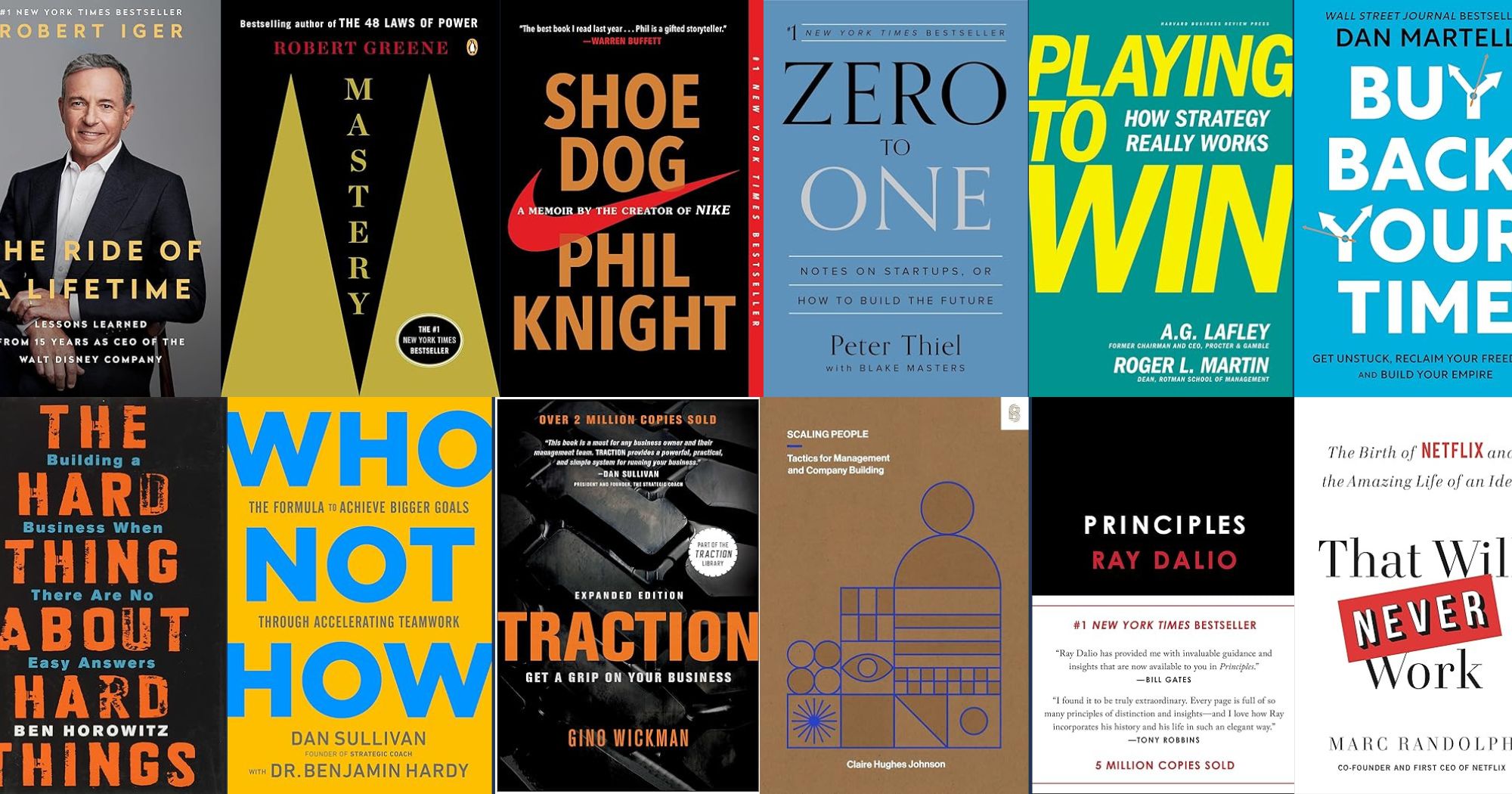
Knowledge is power, right? Well, one of the easiest ways to improve your knowledge is by reading the right books.
Here are my book recommendations for founders, operators, and business owners, so add them to your reading list, and start making your way through them. The list covers a fair bit of ground, from Phil Knight on the early days of Nike to Bob Iger on leading through big strategic bets at Disney.
Shoe Dog: A Memoir by the Creator of Nike by Phil Knight

Shoe Dog is Phil Knight’s account of how Nike went from a side hustle selling Japanese running shoes out of the back of a car to one of the most recognisable brands on the planet. Knight writes openly about the cashflow crises, the legal threats, and the personal cost of building the company. If you’ve ever wondered whether the early years are meant to feel this hard, this is the book to read.
That Will Never Work: The Birth of Netflix and the Amazing Life of an Idea by Marc Randolph

That Will Never Work is Netflix co-founder Marc Randolph’s account of how the company started — back when it was mailing DVDs in red envelopes, and most people thought the idea was a non-starter. Randolph is candid about the false starts, the pivots, and what it was actually like to build the business with Reed Hastings. The title comes from the response he got from almost everyone when he first pitched the idea. Useful reading for anyone sitting on an idea that doesn’t quite fit the prevailing wisdom.
The Hard Thing About Hard Things by Ben Horowitz

Ben Horowitz’s book is often cited when discussing the parts of the job no one warned them about, like firing friends, surviving near-death moments, and making calls when there’s no good option. Horowitz ran Opsware through the dot-com crash before co-founding Andreessen Horowitz (aka A16Z), and his decades of experience shine through in the advice he offers in the book.
High Output Management by Andy Grove

High Output Management was originally written in 1983 by Intel’s former CEO and somehow still gets handed out as required reading at companies like Stripe and Airbnb. Grove treats management as an engineering discipline: measurable, repeatable, and improvable.
Zero to One: Notes on Startups, or How to Build the Future by Peter Thiel

Zero to One is built on a deceptively simple premise: copying what works gets you from one to n, but real progress requires going from zero to one. Thiel’s argument that monopolies, not competition, drive innovation has been picked apart endlessly, but the framework for thinking about what makes a business genuinely defensible is very useful.
The Ride of a Lifetime by Bob Iger

Bob Iger’s memoir covers his 15 years as CEO of Disney, including the acquisitions of Pixar, Marvel, and Lucasfilm. It’s less about Disney itself and more about how to lead a large organisation through big strategic bets — when to push, when to hold, and how to manage the people around you when the stakes are that high. Useful reading for anyone scaling past the founder-led stage.
Playing to Win: How Strategy Really Works by A.G. Lafley and Roger Martin

Playing to Win was written by the former CEO of Procter and Gamble and strategist Roger Martin, and it’s the closest thing to a usable strategy textbook on this list. The framework — five interlocking choices about where to play and how to win — can be run through your own business in an afternoon.
Scaling People: Tactics for Management and Company Building by Claire Hughes Johnson

Scaling People draws on Claire Hughes Johnson’s time as COO at Stripe and earlier at Google. It’s heavier on templates and frameworks than most management books — performance reviews, operating principles, hiring rubrics — which makes it especially useful if you’re building the systems you need to grow.
Principles: Life and Work by Ray Dalio

Principles is Bridgewater founder Ray Dalio’s attempt to codify the rules he used to run one of the world’s largest hedge funds. The book is split into life principles and work principles, with the work section laying out his approach to radical transparency, structured decision-making, and how to disagree well. It’s a long read and a polarising one — some people swear by it, others find the system airless — but the underlying argument that you should write down your operating principles and stress-test them is strong advice.
Mastery by Robert Greene

Mastery sits a little outside the standard business reading list, but it’s a good one to have on the pile. Greene studies how figures like Darwin, Einstein, and Mozart developed their craft and draws out patterns in apprenticeship, deliberate practice, and the long arc of expertise.
Supercommunicators: How to Unlock the Secret Language of Connection by Charles Duhigg

Supercommunicators is Charles Duhigg’s follow-up to The Power of Habit, and it focuses on how the most effective communicators actually operate — recognising which type of conversation you’re in, matching the other person’s emotional register, and asking better questions.
Buy Back Your Time: Get Unstuck, Reclaim Your Freedom, and Build Your Empire by Dan Martell

Buy Back Your Time is Dan Martell’s argument that founders should treat their calendar like a P&L — auditing where time goes, calculating the cost of doing low-value work themselves, and systematically hiring it away. It’s aimed squarely at owner-operators who’ve hit the ceiling of what they can do personally, and it’s quite blunt about the trade-offs.
Who Not How: The Formula to Achieve Bigger Goals Through Accelerating Teamwork by Dan Sullivan and Dr. Benjamin Hardy

Who Not How sits in similar territory to Buy Back Your Time, but instead of asking how you’ll do something, ask who could do it for you. The book makes a case for thinking in terms of partnerships, hires, and collaborators rather than personal capacity.
Traction: Get a Grip on Your Business by Gino Wickman

Traction introduces the Entrepreneurial Operating System, or EOS, a structured approach to running a business that covers vision, people, data, issues, process, and traction. It’s the operating manual that many mid-sized companies run on, and if your business has reached the stage where things keep slipping through the cracks, the EOS framework gives you a proven structure to put in place.