
STARTUP
WA Government Backs Space Industry With $6.5 Million In Funding

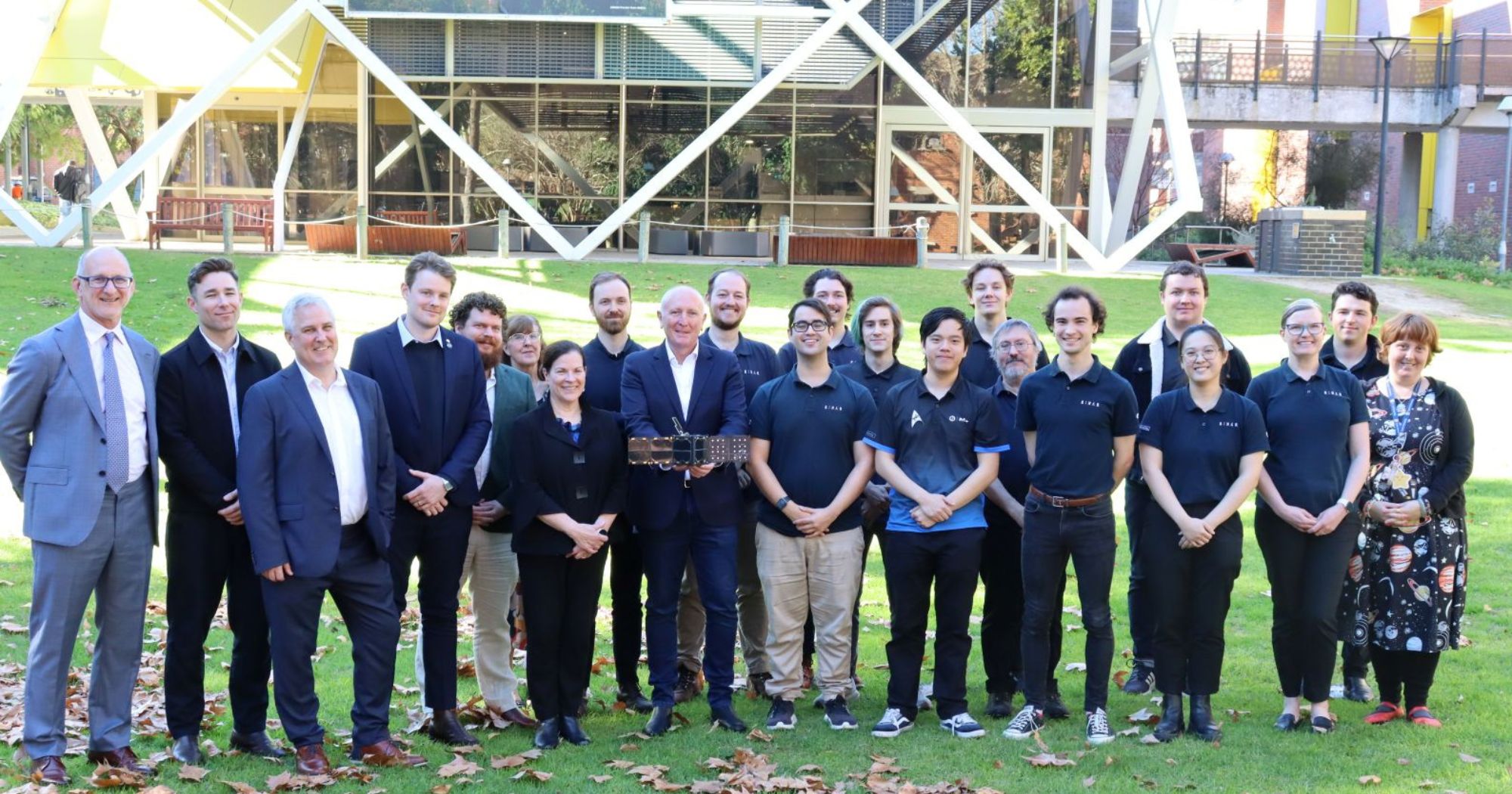
The WA State Government has committed a further $6.5 million to Western Australia’s space industry, with the money split between the Australian Remote Operations for Space and Earth (AROSE) consortium and Curtin University’s Binar Space Program.
“The Cook Labor Government is again looking to the stars with this latest funding boost to our ever-growing space industry,” said Science and Innovation Minister Stephen Dawson.
“”Continuing to co-invest in both AROSE and the Binar Space Program is a clear display of our government’s commitment to enhancing our local space industry capability.”
Announced in the recent 2026-27 State Budget, the funding will be distributed over the next four years, with $4 million going to AROSE Ltd and $2.5 million to the Binar Space Program. The commitment falls under Diversify WA, the state’s economic diversification framework, which names space as one of nine priority sectors.
“The space industry is one of the nine identified sectors under Diversify WA and it is through investments such as this that we are able to continue diversifying and future proofing the WA economy,” added Dawson.
Where the money will go

The Binar Space Program, run out of Curtin University, designs, builds, tests, and operates small satellites. Four Binar satellites have launched since 2021, with a further three expected later this year. The program also trains high school students, undergraduates, graduates, and post-graduates in satellite design, manufacture, and operation, feeding a local talent pipeline the sector will need if it’s to scale.
Curtin University Vice-Chancellor Professor Harlene Hayne welcomed the continued State Government support, adding it would take the WA-grown space program to new heights.
“This continued investment will help the Binar Space Program take its next giant leap and expand its reach to create even more opportunities for Western Australia,” Professor Hayne said.
“It will help inspire and equip students from primary school through to postgraduate levels with valuable STEM skills, while strengthening our research capability and growing partnerships with WA space companies that are helping to shape the future of the industry.”
AROSE is a Perth-headquartered, not-for-profit, industry-led consortium focused on making WA a world leader in remote operations both on Earth and in space. Its work spans national projects in bushfire detection and response, agriculture, and defence, alongside new space and resources technology projects — an emphasis that leans into WA’s existing strengths in remote operations across the resources sector.
Dawson framed the funding as a continuation of the state’s co-investment approach. “Western Australia has the geography, expertise and ambition to be a key player in the space sector, and we’re making sure the right settings are in place to support long-term growth,” he said.
How WA measures up against South Australia
The scale of WA’s commitment is best understood in the context of the state leading Australia’s space industry. South Australia has spent years positioning itself as the centre of the industry, anchored by the Australian Space Agency, which is headquartered at Adelaide’s Lot Fourteen innovation precinct.
On the direct state-investment front, the Government of South Australia has committed $20 million towards local space manufacturing capability, more than triple WA’s latest allocation. South Australia also runs the South Australian Space Industry Centre (SASIC), a dedicated government agency driving space growth, and established the South Australian Space Collaboration and Innovation Fund in 2024 to accelerate the commercialisation of space technology through international partnerships.
The comparison isn’t perfectly like-for-like: much of South Australia’s momentum comes from federal and private capital, including the $245 million SmartSat Cooperative Research Centre headquartered in Adelaide and a recent $25 million raise by spaceport operator Southern Launch.